A Summary of India’s Political System
India is home to one of the largest and most complex democratic political systems in the world. Governing such a nation, with its immense geographical, linguistic, religious, and cultural diversity, presents a significant challenge. Nevertheless, despite these differences, India’s political system has successfully sustained democratic values for more than 70 years. At its core, constitutional supremacy, representative democracy, federalism, and the rule of law form the foundation of governance in the country. Therefore, understanding how this system functions is essential to comprehend the process of governance and the transfer of power from citizens to political institutions in India.
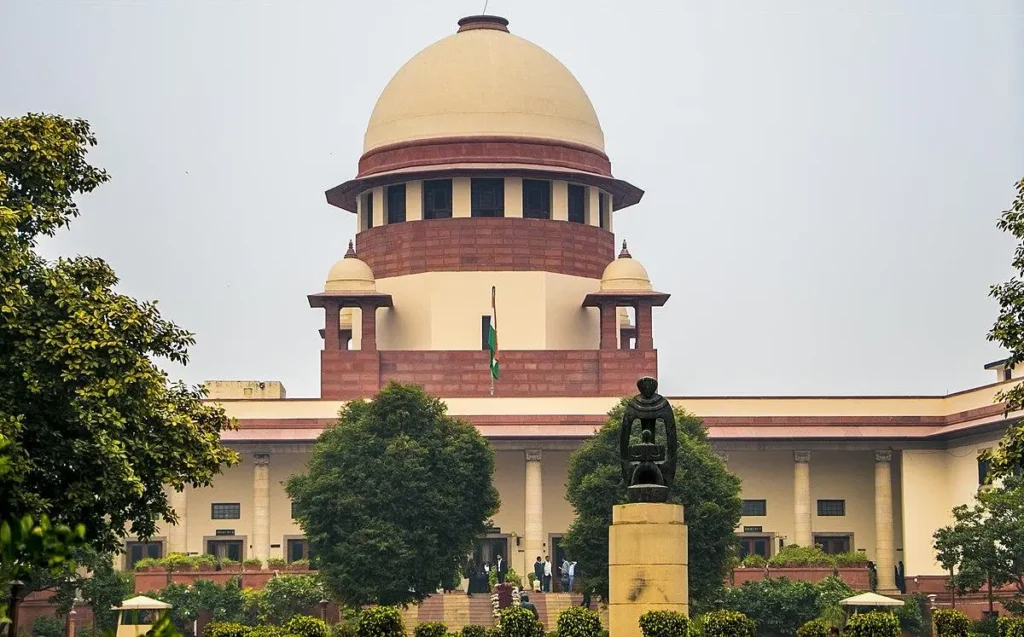
The Constitution of India, which serves as the foundation for governance, is the cornerstone of the country’s political structure. The Constitution, which was ratified in 1950, establishes the government’s organizational framework, divides authority among institutions, protects people’ rights, and establishes obligations that foster national cohesion. It is the ultimate law of the nation, and it is the source of legitimacy for all political power.
India is characterized as a democratic, secular, socialist, and sovereign republic. These principles not only hold symbolic value but also actively shape the functioning of the political system. To begin with, sovereignty guarantees independence in both internal and external decision-making. Similarly, in a multi-religious nation like India, secularism ensures that the state treats all religions equally. At the same time, democracy ensures that political power rests with the people. Finally, the republican form of government guarantees that the head of state is elected rather than inherited.

India, the largest democracy in the world, has a clear political structure founded on the ideas of democracy, federalism, secularism, and the rule of law. The Indian Constitution, which went into effect on January 26, 1950, governs the country’s political system. In addition to guaranteeing individuals’ rights and obligations, this constitution establishes the foundation for the composition, authority, and operations of governmental organizations.
The goal of the Indian political system is to use free and fair elections to reflect the desire of the people. Voting and participating in the selection of representatives are rights that belong to all citizens who are at least eighteen years old. The public’s active involvement in politics upholds democratic principles and holds the government responsible to the people.
India’s governmental structure has changed over time to take into account advancements in technology, economic growth, and social change. India maintains its democratic traditions in spite of obstacles including political division, corruption, and ineffective administration.
The main aspects of India’s political system are examined in this blog, including its constitutional basis, governmental structure, election procedure, and the function of political parties.
📜 India’s Political System: The Constitution and Framework


The Constitution forms the foundation of the Indian political system. It provides a comprehensive framework for governance and stands as one of the world’s longest written constitutions. The Constitution defines India as a democratic, secular, socialist, and sovereign nation. It guarantees fundamental rights such as equality, freedom of speech, and the right to life and personal liberty.
In addition to rights, the Constitution outlines fundamental duties and urges citizens to promote national unity, social harmony, and respect for the nation. Together, these rights and duties create the moral foundation of Indian democracy.
One of the most important features of the Constitution is the separation of powers among the legislative, executive, and judicial branches. This division ensures checks and balances and prevents the concentration of power.
The democratic system ensures that elected representatives form the government. Leaders remain accountable to the people, and regular elections allow citizens to change their government peacefully.
Judicial independence also plays a vital role. Courts possess the authority to review laws and government actions to ensure constitutional compliance. This power upholds the rule of law and protects citizens from the misuse of authority.
All things considered, the Constitution is a living document that, through modifications, adjusts to the times while upholding its fundamental democratic principles.
🏛️ Structure of Government: Legislature, Executive, and Judiciary
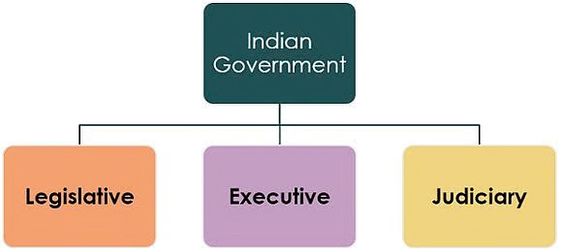
The Indian government operates through three main branches: the Legislature, Executive, and Judiciary.
Legislature
The legislature makes laws for the country. The central Parliament consists of two houses: the Lok Sabha (House of the People) and the Rajya Sabha (Council of States). The people directly elect members of the Lok Sabha, while state legislatures elect members of the Rajya Sabha. Together, both houses discuss, debate, and pass laws.
Executive
The executive implements and enforces laws. It includes the President, Vice-President, Prime Minister, and the Council of Ministers. The Prime Minister serves as the head of government and exercises real executive power, while the President acts as the head of state. The Council of Ministers assists the Prime Minister in governing the country.
Judiciary
The judiciary interprets laws and delivers justice. It comprises the Supreme Court, High Courts, and subordinate courts. The judiciary protects citizens’ rights and upholds constitutional values.
This three-tier structure ensures balanced governance and prevents the misuse of power.
🗳️ Electoral System and Role of Political Parties

Elections form the foundation of India’s democracy. An independent Election Commission conducts elections and ensures fairness, transparency, and impartiality. Elections take place regularly for Parliament, state legislative assemblies, and local municipal bodies.
India follows the first-past-the-post electoral system, in which the candidate who secures the highest number of votes wins the election. Political parties play a crucial role in mobilizing voters, presenting policies, and forming governments.
India’s multi-party system includes both national and regional political parties, reflecting the country’s rich social and cultural diversity. Coalition governments often emerge in this system, requiring cooperation and consensus among different parties.
Political parties also serve as a vital link between the government and the people. They raise public issues, propose solutions, and shape national policies, thereby strengthening democratic participation.
🌟 Conclusion
India’s political system rests on constitutional principles and functions as a strong and dynamic democratic structure. It protects citizens’ rights and ensures accountability and representation in governance. Despite various challenges, India continues to uphold its commitment to democracy, which actively shapes the nation’s political direction.
India’s political system also operates as a well-organized framework that reflects the country’s democratic character. The Indian Constitution guarantees justice, equality, liberty, and representation for a diverse population. Through a parliamentary system of government, an independent judiciary, and regular elections, India maintains a balance of power and accountability.
Over the years, the Indian political system has shown remarkable resilience in addressing challenges such as socio-economic inequality, political instability, and corruption. Active citizen participation, the role of political parties, and the protection of fundamental rights continue to strengthen democratic values. Institutions like the judiciary, the Election Commission, and Parliament play a crucial role in preserving transparency and the rule of law.
In conclusion, while India’s political system provides a strong democratic foundation, challenges such as unemployment continue to test effective governance. For a deeper understanding of this issue, read our comprehensive blog on Unemployment in India.
In general, India’s political system is still changing in response to shifting social and economic circumstances. It is one of the most important and long-lasting political systems in the world because of its dedication to democracy and constitutional values.
Similiar
Pingback: Uttarakhand Best Places - study