Introduction to Unemployment in India
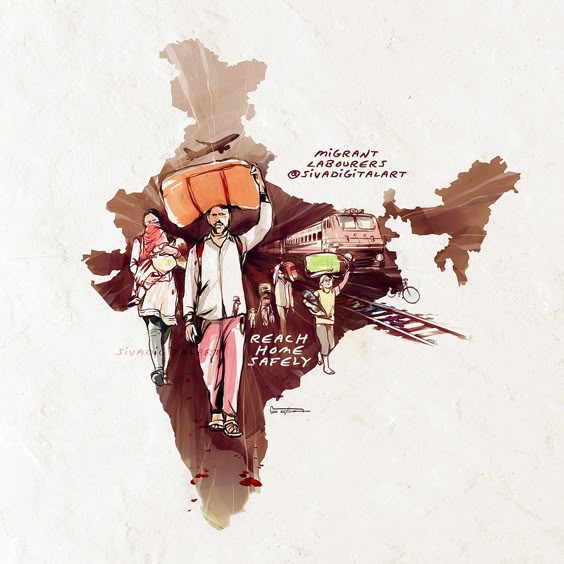

Unemployment stands as one of the most serious socio-economic challenges India currently faces. It refers to a situation in which people who are willing and able to work cannot find suitable employment opportunities. In a developing country like India, unemployment directly affects social stability, economic growth, and individual well-being.
India has a large and rapidly growing population, with a significant number of young people entering the workforce each year. Although this young population has the potential to become a major asset for national development, limited employment opportunities have turned it into a serious challenge. The widening gap between job seekers and available jobs continues to push unemployment rates higher.
Unemployment affects both urban and rural areas of India, though its nature varies by region. In urban areas, educated unemployment has become more common, as degree holders struggle to find jobs that match their skills and qualifications. In rural regions, unemployment often appears in disguised or seasonal forms, especially in agriculture-related activities.
Numerous facets of life are impacted by the problem of unemployment. Economically, it slows down national advancement and decreases productivity. Socially, it makes young people more impoverished, unequal, and frustrated. Social unrest, mental stress, and a decline in self-confidence can also result from prolonged unemployment.
Forms of Unemployment in India
When a person who is capable of working and actively looking for work cannot find a job, they are considered unemployed. It is a crucial sign of the prosperity and progress of a nation’s economy. Inefficiencies in labor markets, education systems, and economic planning are frequently the cause of high unemployment rates.
In India, there are various forms of unemployment:
Open Unemployment When people are willing to work yet are totally unemployed, it’s referred to as open unemployment. This type is frequently observed in urban settings among educated adolescents.
Disguised Unemployment When more individuals work at a job than is truly needed, it’s known as disguised unemployment. It is especially prevalent in rural agricultural environments, when hiring more labor has little to no impact on output.
Seasonal Unemployment Jobs that depend on the seasons, like construction, tourism, and agriculture, have seasonal unemployment. During off-seasons, workers are unemployed.
Structural Unemployment Changes in the economy, such as advances in technology or transitions from old to modern industries, can lead to structural unemployment. Employees lack the abilities required for new positions.
Educated Unemployment When educated people are unemployed and unable to find a job that fits their qualifications, this is known as educated unemployment.
To effectively handle each form of unemployment, distinct policies and solutions are needed. Understanding these types aids in comprehending the intricacy of India’s unemployment issue.
India’s Leading Causes of Unemployment
Several interconnected factors contribute to India’s high unemployment rate by affecting job creation and labor participation. Rapid population growth stands as one of the primary causes. Every year, millions of people enter the workforce, but the economy fails to generate jobs at the same pace. This growing gap between job seekers and available positions leads to widespread unemployment, especially among the youth.
Another major factor is the lack of skill-based education. Although India produces a large number of graduates annually, many lack the technical and practical skills required by modern industries. The education system often emphasizes theoretical knowledge over vocational and professional training. As a result, a serious mismatch emerges between education and employment, making it difficult for companies to find skilled workers and for graduates to secure jobs.
Dependence on agriculture also contributes significantly to unemployment. Agriculture employs a large portion of India’s population, but it remains largely seasonal and dependent on weather conditions. During non-farming seasons, many workers remain unemployed. In addition, disguised unemployment in agriculture reduces productivity and income because more workers are engaged than necessary.
Slow industrial growth further worsens the problem. The industrial and manufacturing sectors have not expanded enough to absorb the growing labor force. Limited industrial development in rural and semi-urban areas forces people to migrate to cities in search of employment.
Automation and technological advancement have also affected employment opportunities. While technology improves efficiency and productivity, it reduces the demand for manual labor in several industries. Workers who fail to adapt to new technologies often lose their jobs and struggle to find alternative employmentn and technological development have also affected jobs. Although technology increases production and efficiency, it also decreases the need for physical labor in some industries. Employees who are unable to adjust to new technology frequently lose their jobs and struggle to obtain new ones.
Additionally, small firms are unable to expand and provide employment due to a lack of entrepreneurship prospects, poor infrastructure, and restricted access to financing. When combined, these elements contribute to India’s ongoing unemployment problem.
Effects of Unemployment on the Economy and Society
In India, unemployment has a profound and enduring effect on the country’s economy and society. The productive potential of the nation is not completely realized when a sizable portion of the populace is still unemployed. Because fewer individuals are contributing to production, revenue generation, and national output, this has a direct impact on economic growth.
Economically, unemployment reduces national income and weakens overall economic performance. When fewer people earn wages, consumer spending declines. This fall in demand directly affects businesses and industries and slows economic growth. High unemployment also places additional pressure on the government, as it must spend more on social welfare programs and unemployment benefits instead of investing in infrastructure and development.
Unemployment also drives poverty and widens income inequality. People without stable jobs struggle to afford basic necessities such as food, housing, healthcare, and education. As a result, social imbalance increases and the gap between rich and poor widens. In rural areas, unemployed individuals often migrate to cities in search of work, which strains urban resources and leads to overcrowding and the growth of slums.
Unemployment severely affects society as well. Long-term joblessness causes frustration, stress, and a loss of self-confidence, especially among young people. Educated but unemployed youth frequently face mental health issues such as anxiety and depression. In extreme cases, unemployment contributes to higher crime rates, substance abuse, and overall social instability.
Families are also impacted by unemployment. Relationships suffer with financial instability, and children’s educational and developmental prospects are restricted. Over time, unemployment hinders the development of human capital because prolonged unemployment causes skills to erode.
In general, unemployment jeopardizes social cohesion in addition to undermining economic advancement. In order to guarantee social stability, sustained growth, and an enhanced standard of living for residents, unemployment must be addressed.
Government Programs and Initiatives to Lower Unemployment
The Indian government has launched several projects and programs to combat unemployment and promote job creation. These initiatives encourage entrepreneurship, strengthen skill development, and generate employment opportunities in both urban and rural areas.
The Skill India initiative equips young people with industry-relevant skills and vocational training. Through programs such as the Pradhan Mantri Kaushal Vikas Yojana (PMKVY), the government bridges the gap between education and industry needs and improves employability.
The Make in India initiative encourages domestic and global companies to invest in manufacturing within the country. By supporting industrial growth, this program creates large-scale employment opportunities, especially for unskilled and semi-skilled workers.
The Mahatma Gandhi National Rural Employment Guarantee Act (MGNREGA) reduces unemployment in rural areas by guaranteeing wage employment to rural households. This program improves income security and reduces seasonal unemployment.
Through initiatives like Startup India and Mudra Yojana, the government promotes self-employment and entrepreneurship. These programs provide financial support, mentorship, and policy assistance to startups and small businesses, enabling them to create jobs and strengthen the economy.
The government has also created new job opportunities by investing in the digital economy, renewable energy, infrastructure, and technology-driven sectors. Together, these efforts demonstrate a strong commitment to reducing unemployment and building a sustainable and inclusive labor market in India.
New job opportunities have also been created by investments in the digital economy, renewable energy, and infrastructural development. The government’s dedication to tackling unemployment through sustainable and long-term solutions is demonstrated by these initiatives.
Conclusion
India’s unemployment problem remains complex and urgent, and it requires active cooperation from the public, the business sector, and society at large. Factors such as population growth, skill mismatch, and limited employment opportunities continue to worsen the issue. However, several government policies and development initiatives offer hope for progress and improvement
India can turn its people into a valuable resource by bolstering the educational system, advancing skill-based training, fostering industrial growth, and boosting entrepreneurship. Reducing unemployment is crucial for social stability, national development, and economic progress. India can develop toward a future with more job opportunities and sustainable growth with ongoing reforms and inclusive policies.
In India, unemployment affects the lives of millions of people and stands as a social issue, not just an economic one. A rapidly growing population and a rising number of educated job seekers continue to increase the demand for employment opportunities. However, a lack of skill-based education, slow industrial growth, and dependence on seasonal sectors have kept unemployment a persistent problem..
The government has taken several significant steps to reduce unemployment through job creation initiatives, entrepreneurship support, and skill development programs. Schemes such as Startup India, MGNREGA, Make in India, and Skill India have created new opportunities, but long-term success depends on effective implementation and continuous improvement.
To effectively combat unemployment, India must prioritize innovation, expand job opportunities in emerging industries, and align education with industry needs. Creating sustainable employment will not only strengthen the economy but also improve living standards and social stability. Through collective efforts and forward-looking policies, India can transform its workforce into a powerful driver of national development.
Pingback: India's Political System - study
Pingback: Jobs in Digital Marketing - study